

Many boaters appreciate bowriders for their versatility. With open bow seating, spacious cockpits and layouts designed for everything from watersports to leisurely cruising, they appeal to a wide range of boating enthusiasts. But when you start shopping, the options can feel overwhelming. Hull designs, engine configurations, seating arrangements, premium tech packages — the choices multiply quickly.
Whether you’re a first-time buyer or upgrading from an older model, knowing what to look for in a bowrider boat will help you find a boat that matches your lifestyle, budget and boating goals. This guide by Formula Boats is your go-to resource for evaluating everything from layout, performance and luxury features to quality red flags.
Key Takeaways
- Bowrider boats are highly versatile, offering various layouts, seating capacities and features designed to suit activities from watersports to relaxed cruising.
- Defining your intended use, typical passenger count and storage options will help narrow your search and ensure you choose a boat that fits your lifestyle and budget.
- When buying a bowrider, consider the seating arrangement, storage accessibility, cockpit comfort, hull design and engine configuration.
- Luxury bowrider boats distinguish themselves with premium materials, high-end finishes, advanced technology integrations and entertainment-focused upgrades.
- Careful inspection — both physical and during a test-drive — can help you spot any red flags, ensuring you make a sound investment in a quality vessel.
- Reviewing the boat’s history and the manufacturer’s reputation is critical before purchasing, especially for preowned models.
First, Define Your Dream
Before you compare models or visit dealerships, take time to clarify your specific needs. Creating a clear profile helps you filter options quickly and focus on boats that truly align with how you’ll use them. Let’s break down some essential factors to consider when defining your dream boat.
Who Are You Boating With?
The number of passengers you’ll typically carry has a direct impact on the size and layout you need. Bowriders can typically accommodate between six and 19 people, though larger models seat even more. If you’re planning frequent outings with extended family or groups of friends, you’ll want a model with a generous seating capacity and enough space for everyone to move comfortably.
Age matters too. Families with young children benefit from layouts that include secure seating areas and easy access to the swim platform. If you’re entertaining adult guests more often, consider lounge-style seating and premium amenities. Think about your most common boating scenarios and choose a boat size that supports them.
What Will You Be Doing?
Bowriders are known for their versatility, but different activities require different features. If watersports dominate your plans, look for models equipped with tow towers, reinforced tow points and ample storage for skis, wakeboards and tubes. A swim platform with an easy-access ladder becomes essential when you’re frequently getting in and out of the water.
Planning to entertain more than you tow? Boat entertaining features include well-designed seating configurations, built-in coolers, premium sound systems and shaded areas for comfort during long days on the water. If fishing is part of your routine, consider whether the layout allows for rod storage and casting space without compromising the social areas.
Many bowriders handle different activities well, but knowing your priority helps you evaluate trade-offs when comparing models.
Where Will You Be Boating?
The type of water you’ll navigate most often should influence your hull choice:
- Deep-V hulls: A deep-V hull with a transom deadrise of around 20 degrees is generally recommended for a smoother ride in choppy water. This design cuts through waves more effectively and reduces the pounding sensation that can make rough conditions uncomfortable.
- Flatter hulls: If boating primarily on calm lakes or protected bays, a flatter hull offers more stability at rest and can be easier to handle at lower speeds.
- Modified-V hulls: These split the difference, providing a balance of wave-cutting ability and stable cruising for those who encounter varied conditions.
You should also consider water depth. Shallow rivers or coastal areas with sandbars require attention to draft and propeller protection.
Where Will You Store It?
Before you fall in love with a specific boat, think through where it will live between trips. Your storage situation shapes which boats are realistic options and affects what ownership will actually cost.
Start by asking yourself these questions:
- Marina or trailer: Do you have access to a slip, or will you need to trailer the boat? If trailering, consider towing capacity, launch ramp availability and whether the boat will fit in your garage or driveway. Check local zoning regulations — some neighborhoods restrict where you can park boats.
- Storage budget: How much are you willing to spend on ongoing fees? Marina slips and dry storage facilities charge monthly or seasonal rates that vary by location. Trailer storage at home eliminates those costs but may require investing in a quality trailer and towing equipment.
- Usage frequency: How often do you realistically want to use the boat? If you’re the type who wants to launch on a whim, trailer storage gives you complete control over timing. If you prefer to show up and go, a marina slip might justify the extra cost.
Your storage reality will narrow down which boats make sense. A 26-foot bowrider might be perfect on the water, but if you can’t tow it or afford slip fees, it won’t work for your situation. Define these constraints now so you can shop within realistic parameters.
Decoding Bowrider Features: From Hull to Helm
Once you’ve defined your needs, it’s time to evaluate the specific bowrider features that will make or break your ownership experience. Translate your wishlist into tangible attributes you can inspect and compare.
The following are some essential features to consider when buying a bowrider boat.
Size, Layout and Zoning
Bowrider layouts are zoned for different activities, each serving a distinct purpose. The bow typically serves as a social area with wraparound seating that encourages conversation. Just behind it, the helm and cockpit form the operational zone where the captain maintains visibility and control while passengers stay comfortable. Finally, the stern and swim platform create an activity zone for watersports, swimming or boarding.
Consider how the layout will work for your primary activities. If you do a lot of watersports, you’ll want easy access to the swim platform without requiring guests to navigate around the helm. On the other hand, if cruising and entertaining are priorities, the flow between bow seating and cockpit should feel natural and open. Mentally walk through a typical day on the water and assess whether the layout supports the way you’ll actually use the boat.
Seating, Storage and Cockpit Comfort
When evaluating bowriders, the essential features to consider focus on three core areas — seating, storage and the cockpit. How these elements are designed and integrated will determine whether the boat feels right for your lifestyle:
- Comfortable, durable seating: When it comes to seating, look for well-padded, UV-resistant upholstery that can withstand sun, water and heavy use. Features like adjustable bolsters and reclining backrests enhance this foundation, adding versatility for a range of activities. The seating configuration should also accommodate your typical passenger count without feeling crowded.
- Ample gear storage: The best bowriders offer in-floor storage and dedicated lockers for a clutter-free experience. Be sure you have enough space for all the required equipment in addition to the fun supplies you want.
- Cockpit features: On a lake day on the water, you’ll appreciate a helm that keeps controls visible and within reach. Small details like cup holders, phone mounts and footrests make hours on the water even more enjoyable.
Performance and Power: What Drives a Great Bowrider?
Even the most beautiful layout won’t matter if performance falls short on the water. That’s why understanding a bowrider’s performance characteristics helps you choose a model that delivers the ride quality, speed and handling you expect.
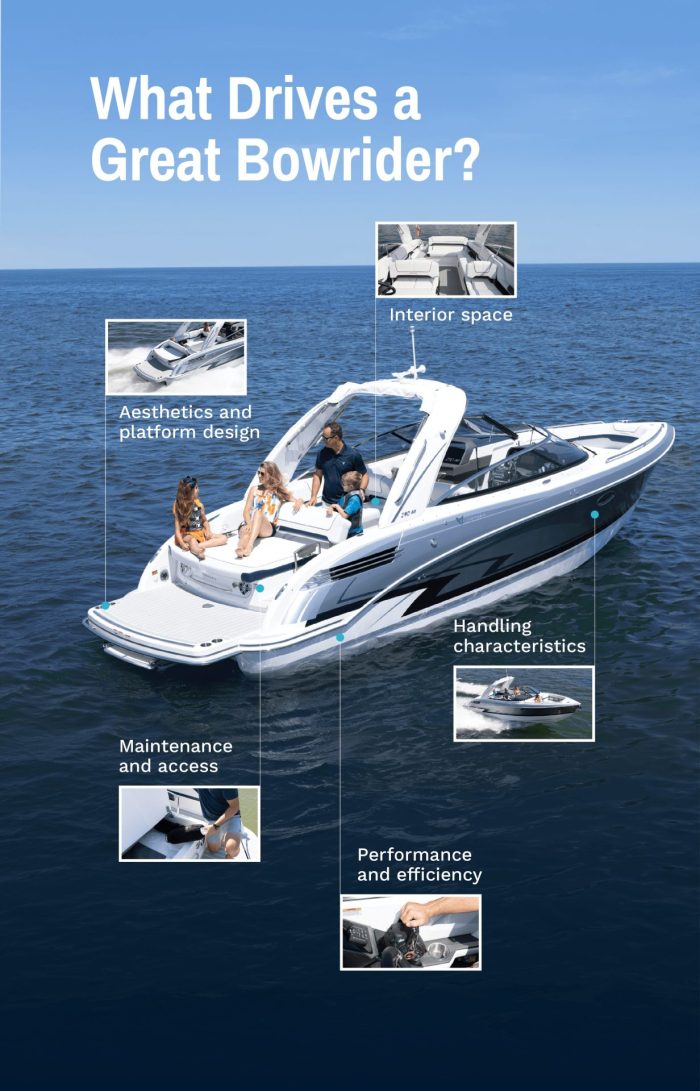
Among all performance factors, engine configuration is one of the most significant decisions you’ll make. You can choose an outboard or a sterndrive. Here’s how they compare:
- Maintenance and access: Maintenance is often simpler with outboards because their engines are located outside the hull, making them easier to access. Sterndrives call for more attention, but with a little care, they can be just as reliable for the long haul.
- Aesthetics and platform design: Sterndrives provide a more traditional look with a cleaner stern appearance and often provide a larger, more usable swim platform. Outboards are visible at the transom, but modern designs have become increasingly streamlined.
- Interior space: Outboards offer more room inside the boat because the engine is mounted externally, leaving the interior unobstructed for storage or additional seating. Conversely, sterndrives have the engine housed within the boat, which can limit interior space.
- Handling characteristics: Sterndrives tend to offer a lower center of gravity with the engine weight positioned lower and more forward, which some boaters prefer for handling. Outboards concentrate weight at the stern, creating a different feel that many find equally responsive.
- Performance and efficiency: Fuel efficiency and power delivery differ between the two. Both configurations have loyal followings based on on-water experience and specific performance preferences.
If ease of maintenance and interior space rank high on your priority list, outboards may be the better choice. If you prefer the aesthetics and handling characteristics of a sterndrive, that’s a valid direction too. Many modern bowriders offer both configurations, giving buyers flexibility to choose what works best for their boating style.
Elevating Your Experience With Premium Options
Once you’ve nailed down the fundamentals, luxury bowrider boats distinguish themselves through premium features and customization options. These upgrades transform a functional vessel into a personalized experience that reflects your taste and enhances every outing.
Beyond the Basics
Luxury bowriders elevate the onboard experience with materials and finishes that rival high-end automobiles. These details make a noticeable difference in comfort and aesthetics:
- Premium leather: Top-tier marine engineered leather offers a refined look and superior durability compared to standard vinyl. It resists fading, cracking and mildew while providing a softer, more luxurious feel.
- Custom stitching: Custom stitching and bespoke detailing complete the luxury experience, letting you personalize your bowrider to reflect unmistakable style and craftsmanship.
- High-end flooring options: Teak-finish decking, premium woven vinyl and cushioned marine flooring provide both comfort and visual appeal. These surfaces are easier on bare feet and add a sophisticated aesthetic to the cockpit and swim platform.
Must-Have Tech
Modern bowriders integrate technology that enhances safety, entertainment and ease of use. Many models offer large touch-screen displays at the helm that can integrate with all the boat’s systems for centralized control. When evaluating technology upgrades for your boat, consider these systems:
- Navigation and chartplotter technology: High-resolution chartplotters provide real-time mapping, depth contours and waypoint tracking. When paired with GPS integration, this technology ensures you always know your position and can navigate confidently in unfamiliar waters.
- Fish finder and underwater imaging: If fishing is part of your plan, sonar and imaging technology reveal underwater structure, fish location and bottom composition. Even casual anglers benefit from the added insight.
- Premium audio systems: Marine-grade speakers, subwoofers and amplifiers deliver concert-quality sound built to withstand wind, water and sun. To complete the experience, Bluetooth connectivity and multi-zone controls let you customize the soundtrack for different areas of the boat.
- Automated features: Joystick control systems simplify docking and maneuvering at low speeds. These systems are especially valuable for less-experienced boaters or in tight marina spaces where precision matters.
Entertainment and Watersport Upgrades
Beyond core technology, luxury bowrider boats offer entertainment and activity-focused upgrades that maximize enjoyment. Built-in coolers keep beverages cold without taking up seating space. Strategically placed cup holders ensure everyone has a secure spot for their drink. Wet bars with sinks and storage turn the boat into a floating entertaining space.
For watersports enthusiasts, advanced tow towers provide higher tow points for better line clearance and can integrate speakers, lighting and wakeboard racks. Focus on features that align with how you’ll actually use the vessel.
Red Flags to Watch For
Knowing how to spot potential problems protects your investment and ensures you bring home a quality boat, regardless of whether you’re shopping new or pre-owned.
Red Flags During the Inspection
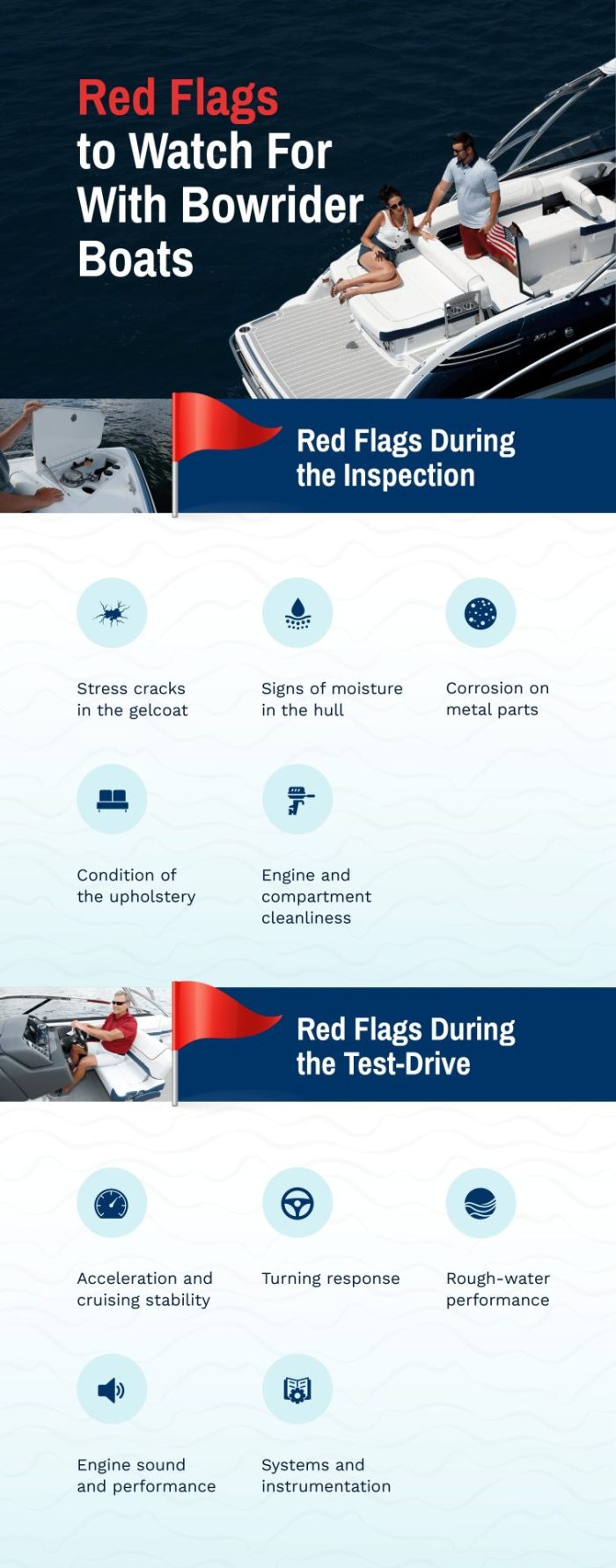
A detailed physical inspection can uncover problems before you commit. Walk through the boat and watch for these warning signs:
- Stress cracks in the gelcoat: You might notice small, spider-web-like cracks near hardware, hatches or other high-stress areas. While these cracks are sometimes just cosmetic, finding them in multiple locations may indicate deeper structural issues.
- Signs of moisture in the hull: Does the hull have a musty smell or discolored areas? These clues can indicate water intrusion, a problem that threatens the boat’s structural integrity and often requires costly repairs.
- Corrosion on metal parts: When inspecting metal hardware, rails and fittings, look for excessive rust or pitting. These can point to a lack of care, especially after saltwater outings. In severe cases, you may need to factor in replacement costs.
- Condition of the upholstery: Has the upholstery held up, or does it show wear? Run your hand along the stitching to assess quality. If you spot cracks or fading on a pre-owned model, it may mean other systems have been neglected as well.
- Engine and compartment cleanliness: For new boats, check for proper assembly, secure wiring and professional installation, free of shipping damage. The best pre-owned boats have clean, well-maintained engine bays. If you find oil stains, loose wiring or signs of makeshift repairs, you should invest further.
Red Flags During the Test-Drive
Since you’re investing a significant amount in a bowrider boat, it’s essential to test-drive the boat to see how it actually performs and whether it meets your expectations. Pay attention to these factors:
- Acceleration and cruising stability: Pay close attention as you accelerate. Do you notice any odd vibrations, or is the ride consistently smooth? If you find yourself making frequent steering corrections at cruising speed, the boat may have alignment or handling issues.
- Turning response: When you turn the wheel, you should feel the boat respond instantly and predictably. If you instead find yourself making repeated corrections or struggling with sluggish steering, that’s a sign to ask more questions.
- Rough-water performance: If you have a chance, test the boat in choppy water to feel how the hull handles real-world conditions. Notice whether the ride remains controlled or if the boat starts to pound and bounce unexpectedly.
- Engine sound and performance: Engine performance should be both strong and smooth. Listen out for unusual noises, such as knocking or grinding, and check that the engine reaches its rated RPM range without struggling.
- Systems and instrumentation: No one wants surprises after they’ve committed, so double-check every gauge and electronic feature, from the bilge pump to navigation lights.
Red Flags in the Boat’s History and Paperwork
Always ask to see the boat’s paperwork, especially if it’s pre-owned. Consistent, thorough maintenance records mean the previous owner prioritized care and swift repairs. On the flip side, missing or incomplete records should prompt you to dig deeper, as unresolved issues may be lurking below the surface.
Be wary of any salvage title — this status slashes resale value and usually signals past damage that isn’t always visible on the surface.
For both new and pre-owned purchases, verify the hull identification number against records to confirm the boat’s history and ensure there are no liens or legal issues attached to it. Additionally, research the manufacturer’s reputation for quality, warranty support and customer service. Established builders with strong track records typically stand behind their products and provide better long-term support.
Your Next Steps to Bowrider Ownership
The best bowrider boats offer a rare combination of versatility, performance and socially friendly design that few other vessel types can match. From family outings to adrenaline-fueled watersports days, a well-chosen bowrider adapts to your needs season after season.
As you move forward, keep your specific priorities front and center. Once you’ve defined what matters most, let those priorities guide every decision in your search. When you find boats worth considering, take your time during inspections and test drives rather than rushing the process. With these insights, you’re well-equipped to find the right bowrider. Here’s to smooth waters and countless memorable adventures ahead.