

Among recreational powerboats, few designs match the versatility of the bowrider. While most boats move you from point A to point B, a bowrider does something more — it creates space for the experiences that happen in between. If you’re considering your first boat or exploring new options, understanding the bowrider’s strengths and characteristics will help you make informed decisions.
This guide by Formula Boats explores what makes bowrider boats a popular choice for families and water sports enthusiasts alike. You’ll learn about the features that define a modern bowrider and the activities these boats excel at.
Key Takeaways
- Bowrider boats are versatile recreational powerboats, prized for their open bow seating and layouts.
- Key features of a bowrider boat include adaptable bow seating, an ergonomic cockpit with modern controls and a multifunctional stern platform.
- Bowrider boats excel in activities such as water sports, leisurely cruising, socializing, kayaking, snorkeling and casual fishing.
- Choosing a bowrider boat involves matching hull design to your typical boating conditions, considering crew size and engine configuration, and budgeting for long-term ownership.
- A thorough inspection, test drive and documentation verification are crucial steps before purchasing, whether from a dealership or a private seller.
What Is a Bowrider Boat?
A bowrider boat is a recreational powerboat defined by its open bow seating area, a distinctive layout that makes it instantly recognizable. Its design features a cockpit amidships that houses the helm and driver controls and a stern that extends into a swim platform for water access. Underneath, a V-shaped hull delivers smooth performance. These boats typically range from 17 to 35 feet in length, with most models falling in the 20- to 26-foot sweet spot.
The bowrider’s design serves people who want more than point-to-point transportation. It can handle water skiing in the morning, cruising in the afternoon and entertaining friends by evening. This versatility makes it one of the most popular powerboat designs in recreational boating.
How Bowriders Compare to Other Boats
The unique perks of a bowrider become clearer when you compare it to similar boat types:
- Deck boats vs. bowriders: While bowriders use a V-shaped hull that prioritizes speed and handling, deck boats feature a wider, flatter hull. This gives deck boats more interior space and capacity, but they can’t match a bowrider’s performance in rough water or agility at speed. Choose a deck boat if you need maximum passenger capacity for calm lake outings. Stick with a bowrider if you want better water sports performance and the capability to handle varying conditions.
- Boats with enclosed cabins vs. bowriders: The key difference is what happens at the bow. Bowriders open this area for social seating. Boats with enclosed cabins section off this space to create an enclosed cabin for sleeping or storage. You gain overnight capability with an enclosed cabin, but you lose the face-to-face seating and open-air experience that makes bowriders social.
What Are the Key Features of a Bowrider Boat?
The details that define the quality of bowrider boats go beyond basic layout. It’s in the thoughtful design touches, premium materials and an unwavering attention to how discerning individuals truly experience their time on the water. Understanding the following key features helps you recognize craftsmanship and functionality when evaluating different options.
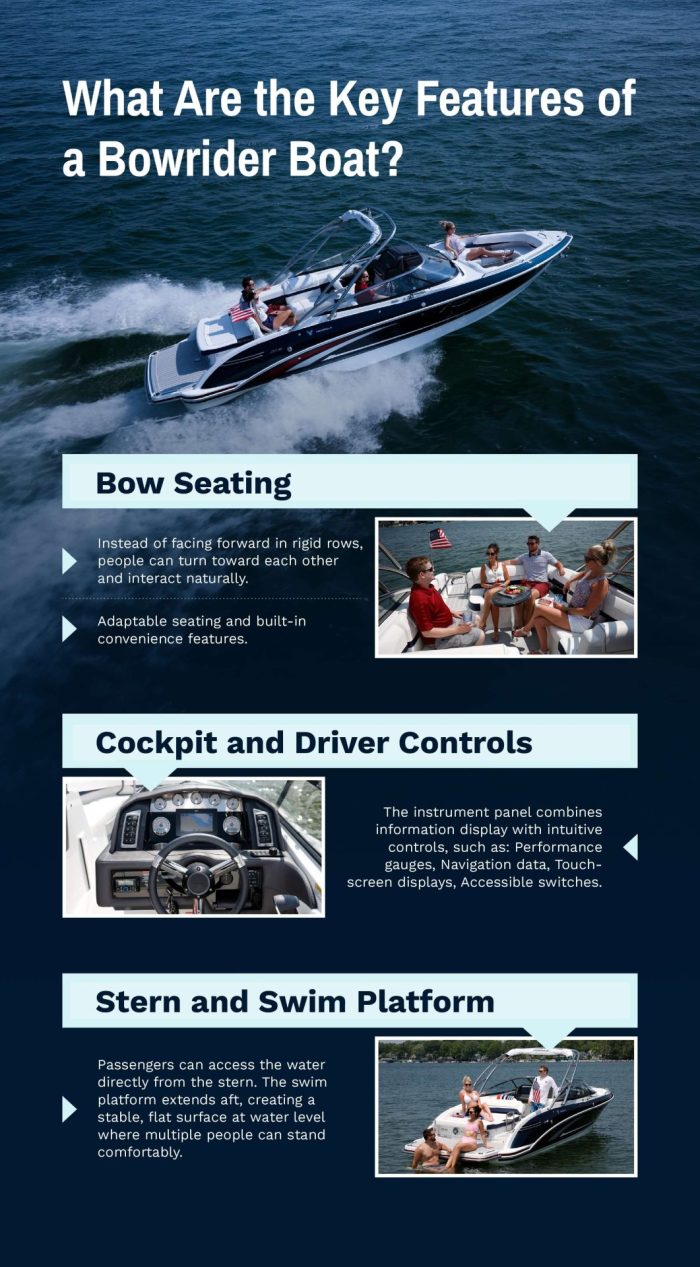
Bow Seating
The bow seating area changes how passengers experience time on the water. Instead of facing forward in rigid rows, people can turn toward each other and interact naturally. The number of people the bow can comfortably accommodate depends on the boat’s overall length. A 20-foot bowrider might seat four adults in the bow, while a 26-footer could handle six or more. Premium models incorporate features like USB charging ports, LED accent lighting and speakers integrated into the seating area.
Bowriders enhance the bow experience with adaptable seating and built-in convenience features, including:
- Sun loungers: Backrests fold down to create full sun pads when you want to relax and work on your tan.
- Dining areas: Those same seats work with removable tables that convert the space into an alfresco eating area for lunch or evening appetizers.
- Comfort features: Whether you’re lounging or dining, armrests provide support, integrated cupholders keep drinks secure and grab handles help passengers move safely.
- Hidden storage: Compartments beneath all that seating provide space for life jackets, towels and gear without cluttering the deck.
Cockpit and Driver Controls
The cockpit is the boat’s command center and social hub. This central area houses everything from driver controls to passenger seating, creating a versatile space where the operator stays in control while everyone else stays comfortable.
At the heart of the cockpit sits the helm or driver’s station. Modern bowriders feature a driver’s seat with bolstering and adjustable positioning, plus a companion seat. Both seats often swivel or recline, and some models include flip-up thigh bolsters for standing operation at higher speeds. The steering wheel and throttle controls are positioned for comfortable operation, whether seated or standing.
The instrument panel combines information display with intuitive controls, such as:
- Performance gauges: Speed, engine RPM and fuel level give you real-time feedback on how the boat is running and how much range you have left.
- Navigation data: Depth readings help you avoid shallow areas, while GPS-equipped models track your position and help you navigate to favorite spots.
- Touch-screen displays: Modern interfaces consolidate multiple functions into a single screen, reducing clutter and putting everything from engine data to audio controls at your fingertips.
- Accessible switches: Lights, bilge pumps and accessories are positioned within easy reach, so you never have to hunt for critical controls.
Stern and Swim Platform
Passengers can access the water directly from the stern. The swim platform extends aft, creating a stable, flat surface at water level where multiple people can stand comfortably. This is where swimmers climb aboard, water sports begin and everyone gathers between activities.
Modern platforms incorporate these features designed for active use:
- Nonslip surfaces: Textured finishes prevent slips and falls when the platform is wet from swimmers climbing aboard or wave spray.
- Boarding ladders: Telescoping ladders deploy with a single pull and stow flat in or under the platform when you’re done, keeping the platform clear and safe.
- Transom access: Walk-through doors or gates let you step directly onto the platform rather than climb awkwardly over the gunwale.
- Freshwater showers: Mounted rinse stations let swimmers wash off lake water or salt water before getting back into the boat.
- Tow points: Reinforced mounting points are engineered to handle the stress generated by towing skiers and wakeboarders, with height and location designed to optimize rope angles.
Activities You Can Explore With a Bowrider Boat
Owning a bowrider means you can enjoy a variety of activities. A single vessel serves multiple roles, adapting to your mood, your crew and the conditions.
Water Sports
Bowriders work well for towing skiers, wakeboarders and tubers. The combination of adequate power, secure tow points and practical layout makes these boats effective water sports platforms. The swim platform and boarding ladder simplify getting riders in and out of the water between runs, while a spotter can observe the skier from cockpit or bow seating as the driver maintains consistent speed. The bowrider’s speed range accommodates everyone from young children on gentle runs to teenagers seeking more aggressive rides.
Storage considerations become practical when you’re actively pursuing water sports. Well-designed bowriders incorporate dedicated compartments for wet gear, keeping it accessible but out of the way. Plus, drainage systems prevent water from pooling on the deck after repeated swimmer boarding.
Cruising and Socializing
Not every outing revolves around activity. Sometimes, the goal is to enjoy being on the water. The bowrider’s layout works well for leisurely cruises and social gatherings. You can explore coastlines, visit waterfront restaurants, or anchor in a quiet bay while friends relax and conversation flows.
The bow and cockpit seating let groups spread out or cluster together. Passengers aren’t confined to single positions — they can move between the bow’s forward-facing experience and the cockpit’s more sheltered environment. Shade options, such as Bimini tops, provide sun protection during extended outings. With the swim platform, passengers can dangle their feet in the water while socializing.
Fishing
While bowriders aren’t purpose-built fishing boats, they handle casual fishing well. The open deck layout gives anglers room to cast and move around. Rod holders can be added to the gunwales or transom. The swim platform works as a landing area for bringing fish aboard. Bowrider boats are particularly popular for inshore and lake fishing, as well as for teaching kids to fish in a comfortable, social environment.
Snorkeling
The swim platform makes bowriders ideal for snorkeling expeditions. You can anchor near reefs, drop the ladder and explore underwater without the hassle of shore access. The platform provides a stable staging area for gearing up and a safe reentry point when you’re done. Many boaters anchor in clear, shallow areas, letting passengers rotate between snorkeling and relaxing on deck.
Kayaking
Thanks to the stern platform, kayaks can be easily deployed and retrieved while away from the shore. Once on the water, the bowrider serves as a mobile base camp. Paddlers can explore narrow channels or shallow areas the boat can’t access, then return to the swim platform for breaks, snacks and shade. Groups with mixed interests appreciate this flexibility — some paddle while others relax on the boat.
Choosing Your Perfect Bowrider
Choosing the right bowrider comes down to understanding how you’ll actually use the boat. The boat that’s perfect for one family might not suit another, and that’s why thoughtful decision-making matters. Let’s break down some essential factors to have in mind.
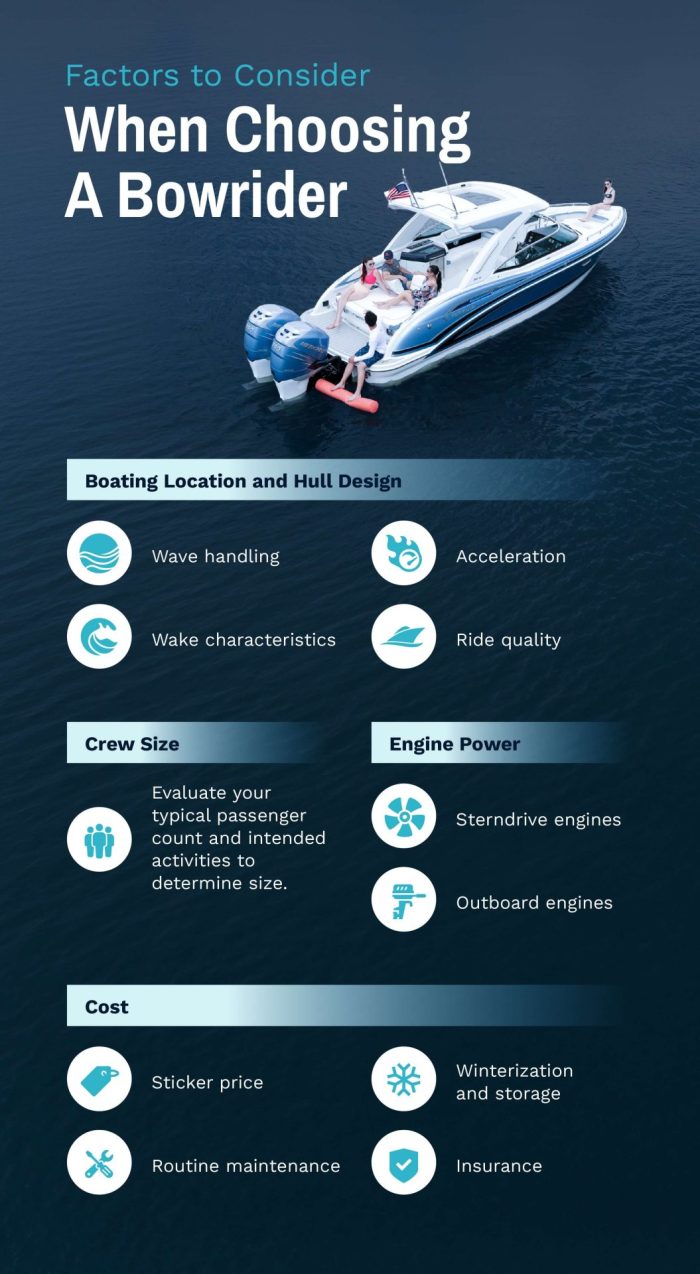
Boating Location and Hull Design
Where you’ll boat determines which hull design serves you best. A deep-V hull features a sharper angle at the keel. This design slices through waves more effectively, delivering a smoother ride in choppy conditions. If you’re boating on coastal waters, large lakes or areas with frequent wind and wave action, a deep-V hull makes sense. The trade-off is a slightly narrower beam and less interior space compared to flatter hull designs.
Modified-V hulls reduce the deadrise angle toward the stern, creating a flatter running surface. Many recreational bowriders use modified-V designs because they optimize versatility — handling chop reasonably well while delivering better performance in calm conditions.
Hull design impacts multiple performance factors, including:
- Wave handling: Bottom shape influences how the hull absorbs wave impacts.
- Wake characteristics: Entry angle and stern design affect towing performance.
- Acceleration: Flatter stern sections help boats plane quickly.
- Ride quality: Deep-V hulls absorb impacts that would jar passengers in flatter designs.
Think about your typical boating conditions. Calm inland lakes favor one design, while windswept coastal bays favor another. Match the hull to where you’ll spend most of your time.
Crew Size
Start with your typical passenger count and intended activities. A family of four might find a 22-foot bowrider ideal, while groups of six to eight people regularly aboard would benefit from a 26-footer or larger. Don’t choose based on occasional use — pick the size that fits your normal outings.
Consider how your crew actually uses the boat. If water sports are a priority, you’ll want enough seating for active participants plus observers. If cruising and socializing drive most trips, comfortable seating and elbow room matter more than raw capacity.
Engine Power
Engine choice significantly impacts a bowrider’s performance, maintenance requirements and interior layout. The two most common configurations are:
- Sterndrive engines: This engine option mounts inside the boat with the drive unit extending through the transom. The inboard-outboard configuration places engine weight low and centered, improving stability in turns and rough water. You gain usable deck and storage space since the engine sits inside rather than hanging off the back.
- Outboard engines: These mount externally on the transom and offer different advantages. Modern four-stroke outboards pack impressive horsepower into relatively light packages, improving overall boat efficiency. External mounting means easy access for routine service, oil changes and inspections without opening hatches.
Cost
Bowrider ownership involves more than the sticker price. Your total investment covers annual operating costs, including:
- Routine maintenance: All boats require regular attention. This includes routine engine servicing, hull cleaning to prevent marine growth and checking electrical systems. Understanding a basic maintenance schedule can help you budget time and resources.
- Winterization and storage: In colder climates, proper winterization is essential to protect the engine and plumbing from freezing. Safe and secure storage is also crucial for preserving your boat’s condition.
- Insurance: Protecting your investment with comprehensive marine insurance is a standard practice for bowrider owners, covering potential damages, liability and other unforeseen events.
These recurring costs add up over the seasons, so factoring them into your decision helps you choose a boat you’ll genuinely enjoy owning for years.
Where to Buy a Bowrider Boat
Once you know what you’re looking for, you’ll need to decide where to purchase. Most buyers choose between dealerships and private sellers, and each route offers different advantages.
Dealerships
Authorized dealers provide benefits that extend beyond the initial transaction. Manufacturer warranties cover defects and mechanical issues — protection that private sales rarely include. Dealer service departments know your specific model and maintain relationships with parts suppliers, which means faster repairs and more reliable maintenance over time.
Financing through dealerships often secures better rates than private loans. Many dealers offer trade-in programs that make upgrading later easier. You can compare multiple models in person and get answers to technical questions from staff who work with these boats daily.
Private Sellers
Private sales typically offer lower purchase prices since you’re avoiding dealer markup. This appeals to buyers working within tight budgets or those comfortable handling their own maintenance.
The trade-offs are significant. You assume all risk for mechanical conditions and hidden issues. Most private sales offer no warranty coverage, meaning repair costs fall entirely on you. You’ll arrange your own financing, insurance and registration without dealer support.
The price savings can be real, but weigh that against warranty protection, service relationships and ongoing support. For most buyers, especially first-time boat owners, dealer advantages outweigh the initial cost difference.
Tips for Buying a Bowrider Boat
Whether you’re buying from a dealer or a private seller, a systematic approach to inspection and verification protects your investment.
Inspect Before You Commit
Start with a thorough visual inspection. Look for cracks, stress fractures or repairs in the hull and deck. Check the gel coat for fading, blistering or significant scratches that suggest poor maintenance. Examine the seating for tears, sun damage or mildew. Open every hatch and storage compartment to check for water intrusion, which indicates seal failures or leaks.
Remember, engine condition matters more than cosmetics. Ask for maintenance records showing regular oil changes, winterization and service intervals. If buying privately, consider hiring a marine surveyor to inspect the engine, hull integrity and electrical systems. The survey cost is minimal compared to the cost of discovering hidden damage after purchase.
Take a Test-Drive
Never buy a boat without running it on the water. During the test drive, the engine should start easily and idle smoothly. Accelerate through the full throttle range and listen for unusual sounds or vibrations. The boat should plane quickly and track straight without constant steering correction.
Once you’re at speed, test the steering response through turns. While you’re running through these performance checks, verify that all gauges function properly. You should also try the accessories — lights, bilge pump, horn and any electronics. If the seller resists a water test, that’s a red flag worth heeding.
Verify Documentation
Confirm the seller owns the boat free and clear by checking the title. If there’s an outstanding loan, ensure it’s paid off before or at closing. Request the hull identification number (HIN) and verify it matches the title and registration documents.
If you’re buying from a dealer, ask about warranty coverage. Understand what’s covered, for how long and what actions might void protection. Throughout the process, get all promises in writing rather than relying on verbal assurances.
The Bowrider Advantage
Bowrider boats remain a favorite in recreational boating because they adapt to your priorities and elevate every moment on the water. Armed with this knowledge, you can confidently determine whether a bowrider’s versatile features match your lifestyle and interests. Now you can take the next step in your boat-buying journey with clarity, knowing what to expect and what’s possible on the water.