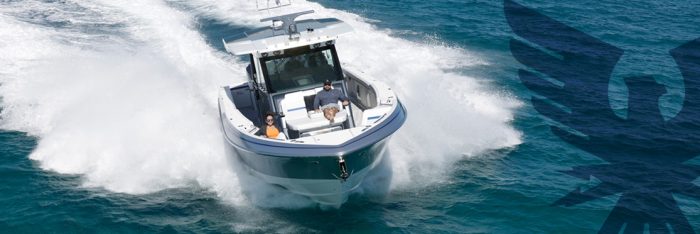
When the good weather arrives, there’s nothing like getting your performance boat out on the water for a few thrills or relaxing waves. But there’s a lot of care and maintenance to consider before setting off safely and making some summer memories.
When it comes to boat maintenance, keeping your performance boat in peak condition is the key to a great summer. Here’s how to ensure your boat maintenance schedule is effective and safety-conscious.
The Ultimate Summer Boat Maintenance Schedule
Knowing how often you should get boat maintenance planned is crucial, especially when preparing for summer. It ensures that your boat-cleaning and maintenance processes are suited to the climate. Having this plan in place now means you’ve got your summer sorted, leaving you with great memories and relaxation on the water.
Engine and Cooling System Care
The engine and cooling systems are like the vital organs of a healthy summer boat. They require care and attention to function effectively. A high-performance marine engine and cooling schedule should include the following:
- Engine care: Inspect your engine carefully, checking for any signs of leaks or clogged air intakes in the fuel system. You should also check the drive belts for signs of wear or lack of tension. Check oil levels before every trip and be sure to change your oil or filters per the manufacturer’s schedule for your specific model.
- Cooling system care: After every 200 hours of use, or at least once a year, check your raw water impeller to prevent overheating. Inspect your cooling system for cracks or loose clamps. Remove debris and saltwater by flushing the system with fresh water regularly. Keep an eye on coolant levels in high temperatures to ensure the mixture is acceptable for summer heat.
- Regularity: Check the oil level before each trip. It’s always worth giving everything else a good look over beforehand, too. While not every check has a strict timeline, spotting a minor issue now can save a lot of repairs and issues later on as the summer continues.
It’s also important to clean any areas where battery connections are made. This is especially true for boats left over the winter and fall seasons. These connections may also need tightening at times, but this should be done only by a professional or when all power has been shut off for safety.
Hull and Exterior Maintenance
Protecting your boat’s exterior finish is important during the summer. Environmental degradation can occur in vessels without proper care and maintenance. Fiber-reinforced polymer (FRP) is a popular material for boats, but poorly maintained and abandoned FRP vessels contribute significantly to marine debris by releasing microplastics as they degrade.
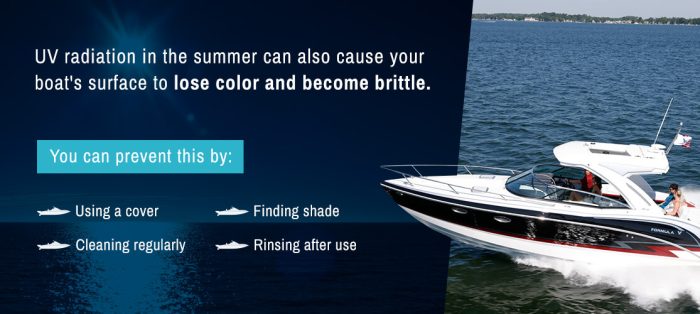
UV radiation in the summer can also cause your boat’s surface to lose color and become brittle. You can prevent this by:
- Using a cover: A good-quality, UV-resistant boat canvas cover helps block direct sunlight when your vessel isn’t in use.
- Cleaning regularly: A clean boat surface is free of salt, dirt and other debris that degrades the vessel’s finish.
- Finding shade: A shaded area, such as a covered dock or a boathouse, can reduce UV exposure. If this isn’t an option, look for a large tree if possible.
- Rinsing after use: A good rinse after saltwater exposure helps to prevent salt buildup and reduce material degradation during the summer.
Regularly waxing your vessel after washing gives it an extra protective layer that helps shield it from harmful rays. Marine waxes and sealants are typically formulated with UV inhibitors to prevent fading and cracking.
Fuel System Management
Summer heat can significantly affect marine fuel. A poorly managed fuel system can cause issues with starting your boat. This is due to the fact that ethanol-blended marina fuel draws moisture from the air, which can lead to a separation between water and ethanol at the bottom of your tank.
Some simple but effective checks for your fuel system include smelling for leaks, carefully examining lines and hoses for deterioration and checking the tank itself for corrosion. Most fuel systems have a clear bowl at the bottom, where the fuel and water are separated. Inspecting this before starting up your engine for the season is essential.
Equipment and Electronics Care
Summer should be about spending quality time with your loved ones on the water, but you can’t overlook summer boat maintenance for your and your passengers’ safety. All required equipment must be functional and well-maintained. The U.S. Coast Guard requires that safety equipment, including personal flotation devices (PFDs), be functional and up to date.
Some federal regulations also apply, including:
- Ventilation: For gasoline-powered boats, ventilation prevents the buildup of explosive fumes. You should also inspect the ducts for obstructions.
- Backfire flame arrestors: These are required for gasoline engines. They must be clean and securely attached to prevent explosion risks.
- Sound-making devices: Horns or whistles must be functional and clear to meet sound requirements.
- Navigation lights: These must be operational and meet visibility requirements.
While not all electronics fall under maintenance regulations, all electronic equipment that serves a safety function should be kept in working order.
Troubleshooting Common Summer Boating Issues
Understanding the smaller steps you can take to make your boat maintenance schedule less daunting is important. It gives you the chance to spot common, easily preventable issues, so you have more time to relax during the summer.
- An overheated engine: This is usually caused by water debris, low coolant levels or a damaged water pump impeller. Reduce to idle and check for water flow and coolant levels when the engine cools.
- Electrical or battery issues: These problems are typically due to heat failure or corrosion. Keeping terminals lubricated and checking for blown fuses are effective first steps to prevent issues.
- Propellers and steering: These issues are usually caused by fishing line wrapped around the shaft or a lack of steering fluid. Regularly checking for debris and lubricating steering tubes helps to prevent propeller and steering problems.
- Running out of fuel: This is typically caused by relying too heavily on the fuel gauge reading. Always be prepared by using the rule of ⅓ fuel out, ⅓ fuel back and ⅓ fuel as a reserve.
If possible, having a spare set of belts, water impellers, engine oil and fuel filters can be extremely useful for performance powerboat upkeep.
Keeping Your Summer Boat Maintenance in Peak Condition
Whether you’re looking to preserve your vessel’s value or keep it working well to create more memories, knowing how often you should get boat maintenance is crucial. Preparing for summer should be an exciting time, where you daydream about the perfect day on the water in the perfect performance boat for you.
If you’re looking to get your dream boat for summer, Formula Boats can help you design a custom vessel to suit your budget and style needs. Find your nearest Formula location, or request a free catalog to learn more.